(minimum resolution: 1024 x 768 - best resolution: 1680 x 1050)
It's been a while that I was able to enjoy the observation of a total eclipse of the sun, which probably is the most outstanding event that an astronomer is able to experience. After having watched the eclipses of 1999 in Austria and of 2006 in Turkey, my wife Hanni and I decided to combine a northern Spain trip with the eclipse, the path of which stretched from Greenland over Icelend to the Iberian peninsula towards the Baleares where totality arrived at sunset.
Newer technology made life easier and lighter. At my last international astronomy excursion I still worked with silver chloride, which had quite better dynamics but much poorer resolution compared to digital technology. This time I decided to use my unmodified Canon EOS 700D for the sake of more natural colour, which in the end was not meaningful anyway because of the low altitude of the sun, which in turn biased the colour again. As I was hesitant whether long focal lengths would suit the low altitude of only 9 degrees above horizon at our planned observation point at Valladolid, I decided to simply use my small 60/360 mm Takahashi, which even my Star Adventurer mount would be able to hold. In order to make sure that the picures were still sharp enough given the marginal payload, I decided to use the 2 seconds mirror lock mode.
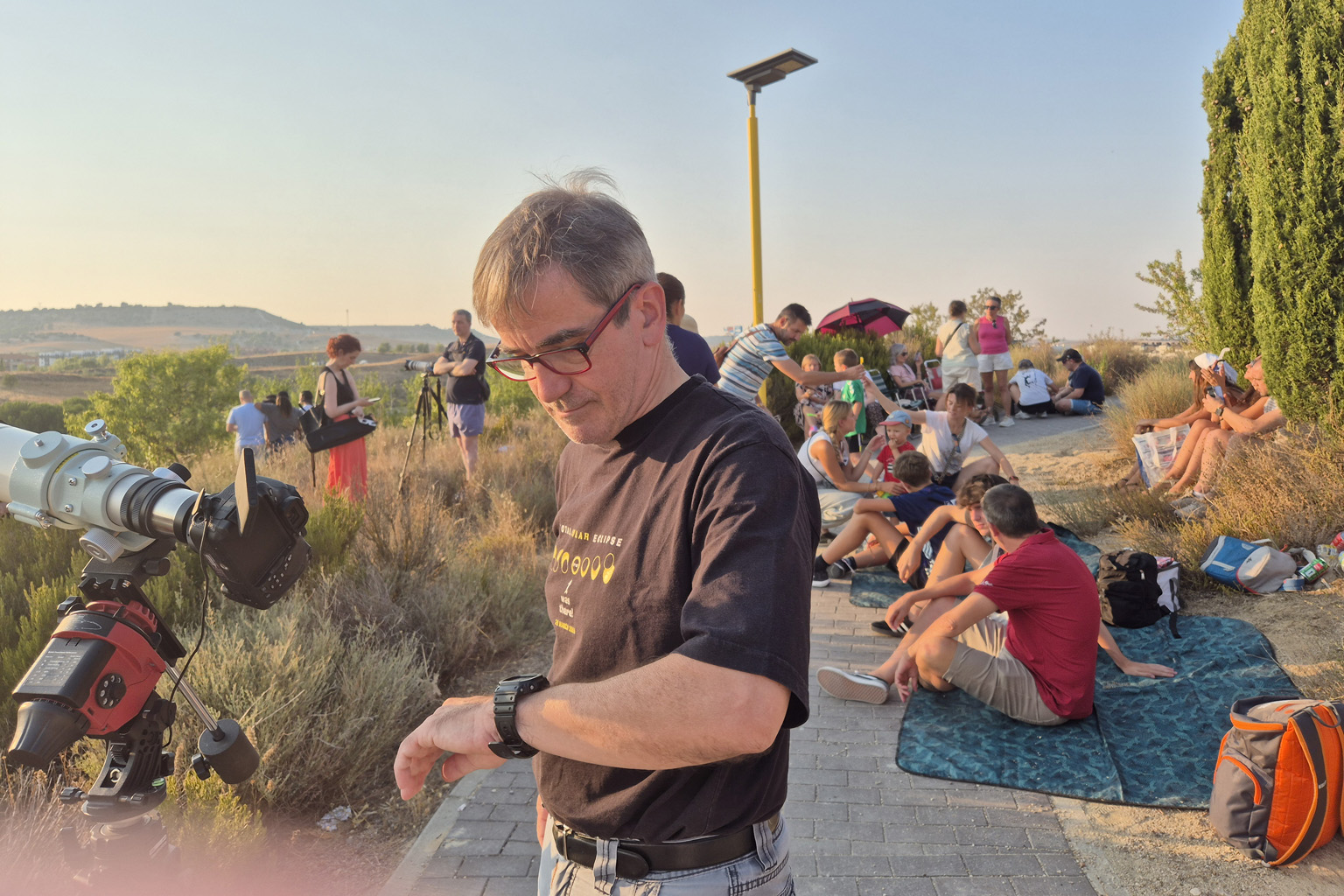
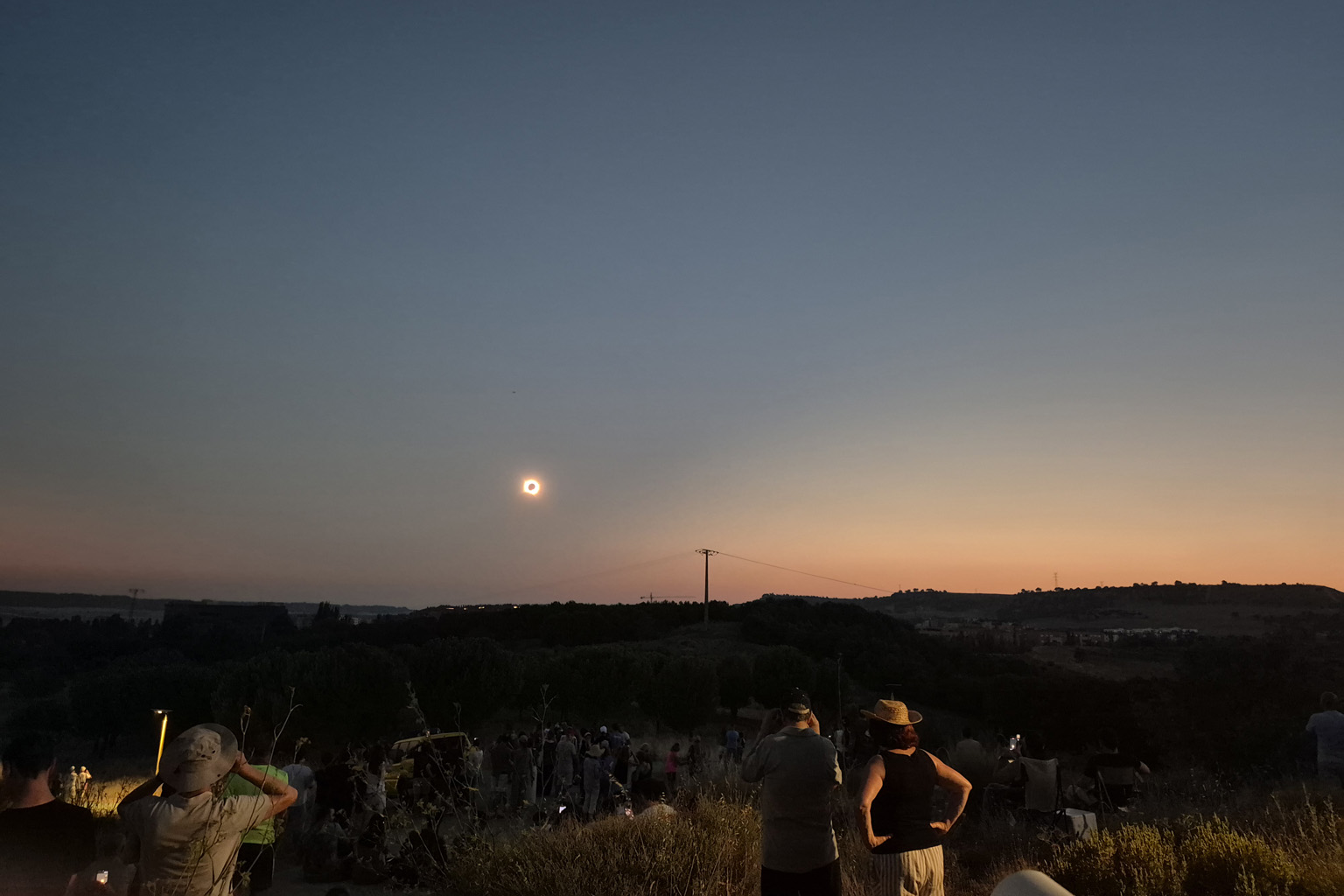
Apart from easier travelling, the light equipment had another advantage: I did not need any car battery. A set of four AA alkaline batteries for the mount and the system battery for the SLR camera allowed us to enjoy the social event at the hill part of the garden at the Villa Augusta hotel. When climing up the hill we realized how many people were joining the eclipse party there. Even a car from the emergency unit was present - reasonable at an evening temperature of still close to 40°
C. But fortunately nobody felt ill or hurt an anckle, so the team was able to enjoy the eclipse just like anyone else.
After having used the partial phase for adjusting the mount and focussing the optics, the great moment approached. (Click on the pictures for larger versions!)
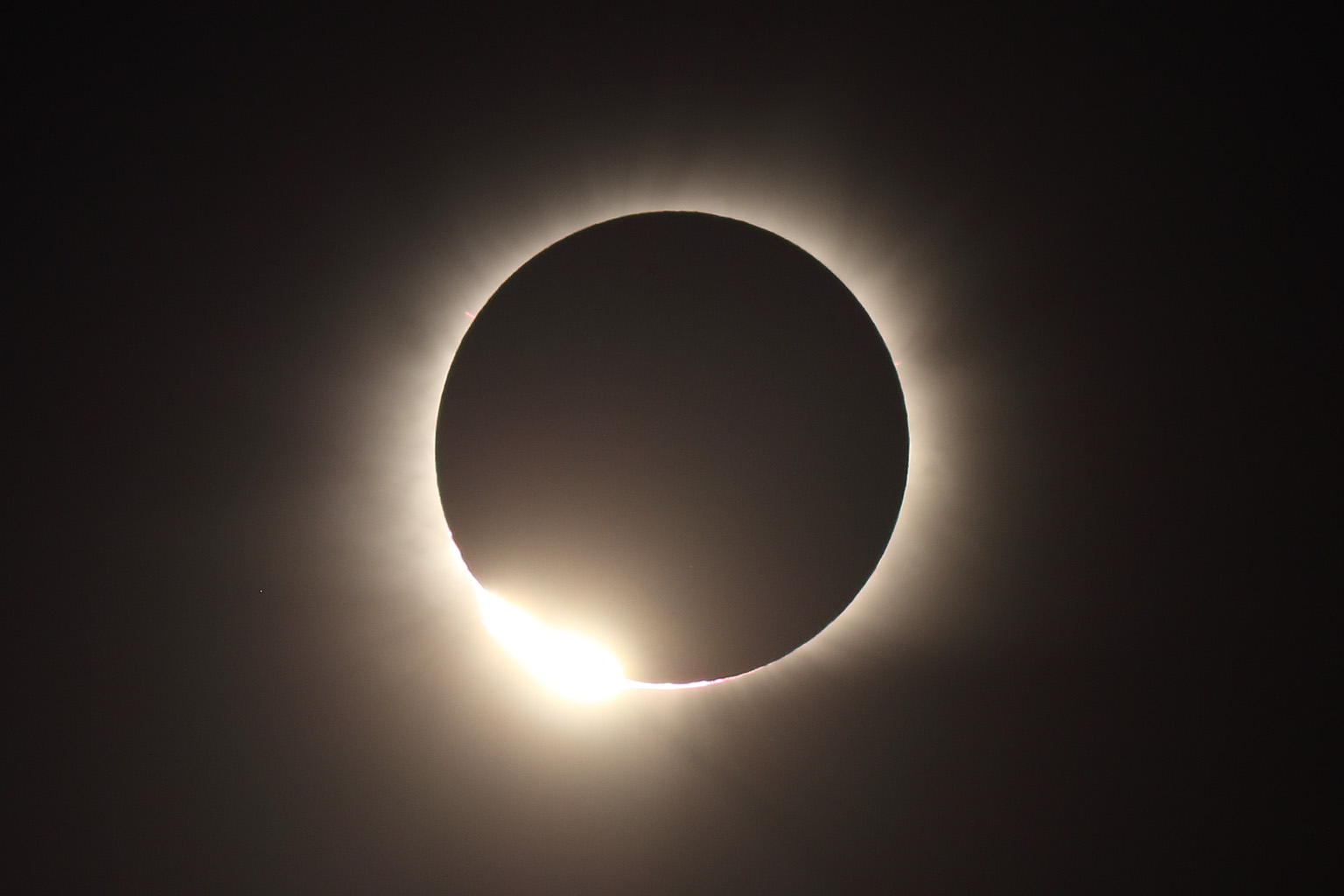
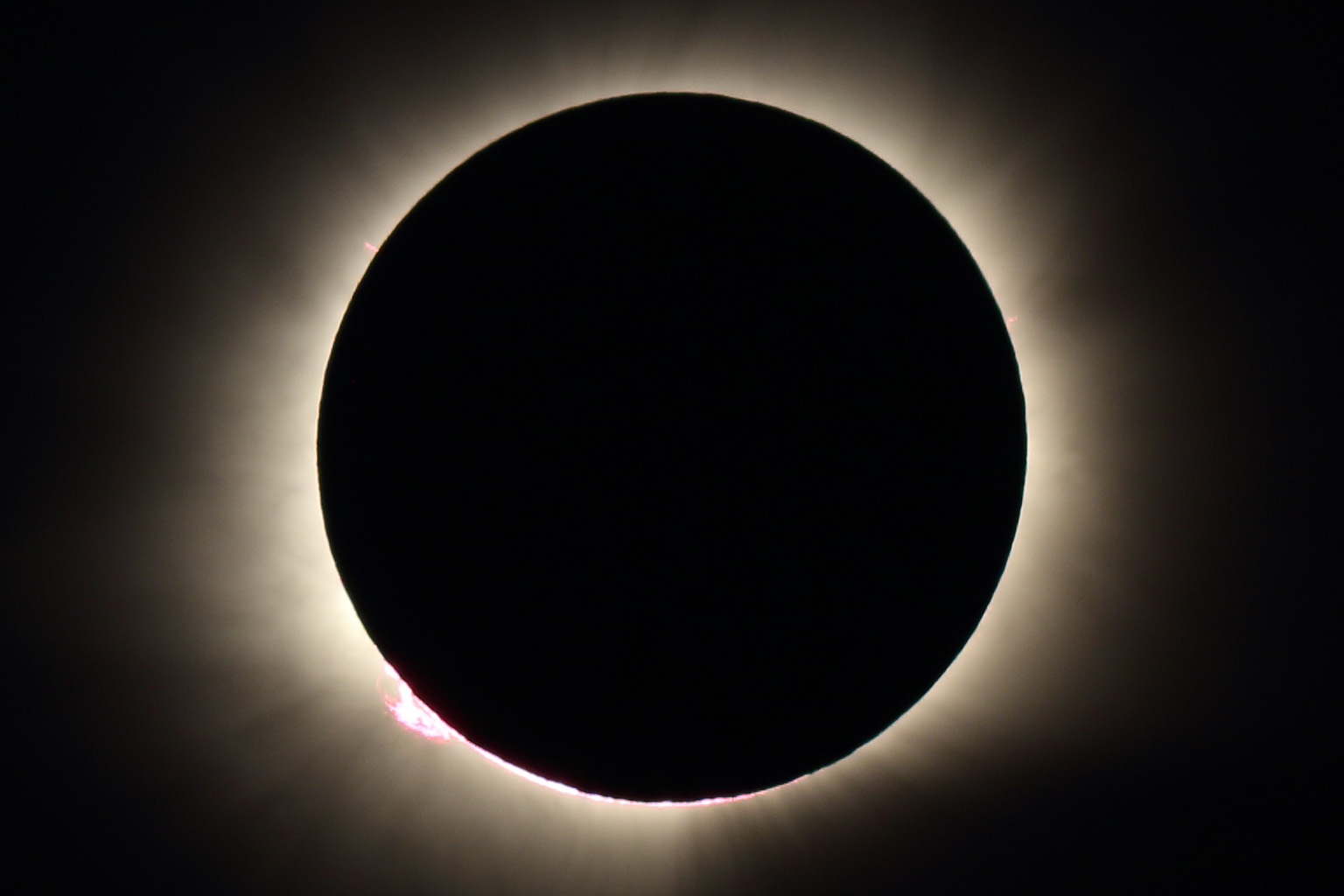
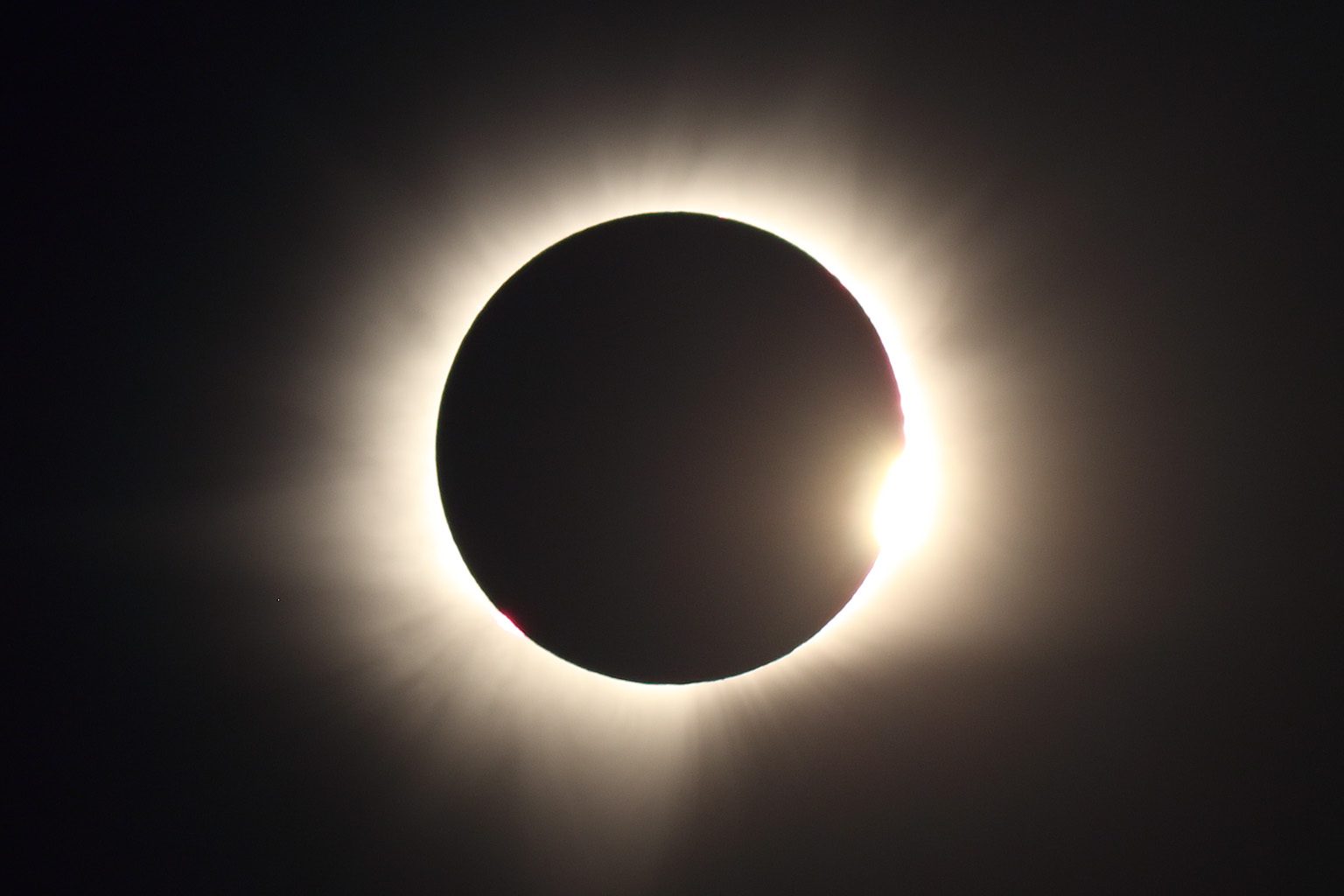
As I was unexperienced with digital equipment exposure times, my best guess with starting my series of pictures was marginally lucky. With the shortest exposure time I was able to capture the 2nd contact perfectly, and then I imaged the inner corona with the complex prominences to the lower left. To the upper left (orientation ~ 10:00) and the upper right (orientation ~ 2:30) delicate minor sparks completed the picture; there is not very much more to look for. Interestingly, the inner corona showed quite some complexity in terms of structure. If I had had a second chance, I'd start with one speed stop shorter, but afterwards you are always smarter...
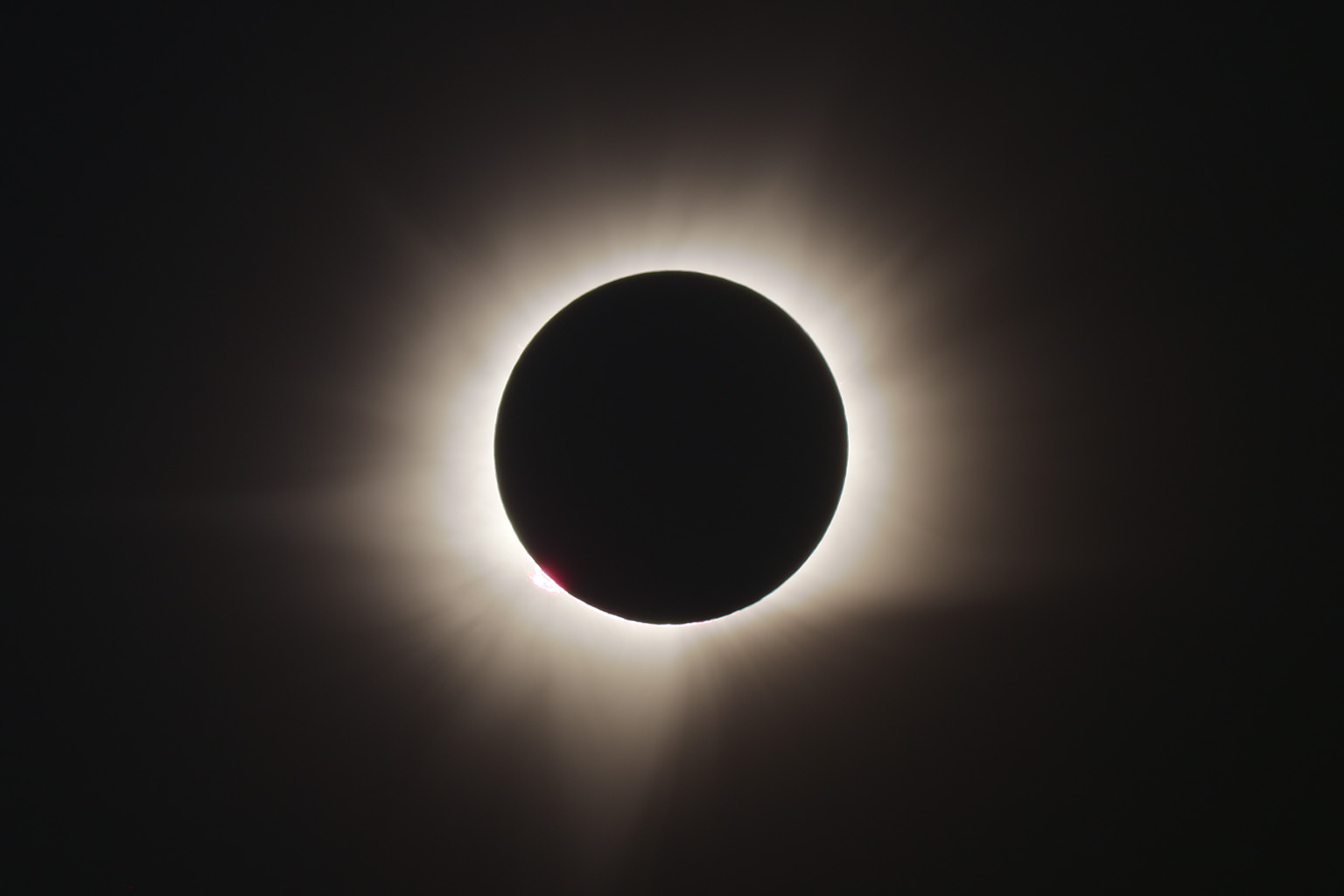
With this frame the series of pictures started towards longer exposure times. Similar to the Turkey pictures, I combined three different exposures in order to compensate the huge contrast over multiple powers of ten.
But time went fast. Less than one and a half minutes after the last sun ray disappeared behind the lunar mountains to the lower left, the sun re-appeared at the right of the new moon. At this point, I was unable to turn down the exposure setting fast enough, so the impression at the end of the eclipse is quite brighter than at the beginning.
Different from our trip to the Turkey eclipse there was much more celebration around. People were cheering about the sun hiding behind the moon and a round of applause came when the sun returned. I completed my series of the partial phases an then we enjoyed the evening event at our hotel. All were in good mood and digested the macic moments we were having the luck to share...
Here you find more technical detail about the pictures:
|
Second Contact Size: 166 KB Lens: 360 mm / 6.0 Camera: Canon EOS 700D Filter: none Exposure time: 1/125 @ ISO 400 Location: 04°47' W, 41°37' N |
Inner Corona and Prominences 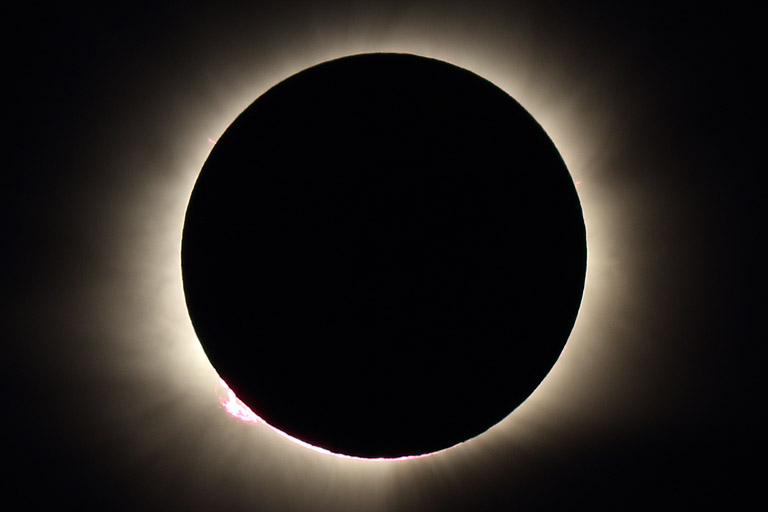 Size: 154 KB Lens: 360 mm / 6.0 Camera: Canon EOS 700D Filter: none Exposure time: 1/125 @ ISO 400 Location: 04°47' W, 41°37' N |
|
Outer Corona 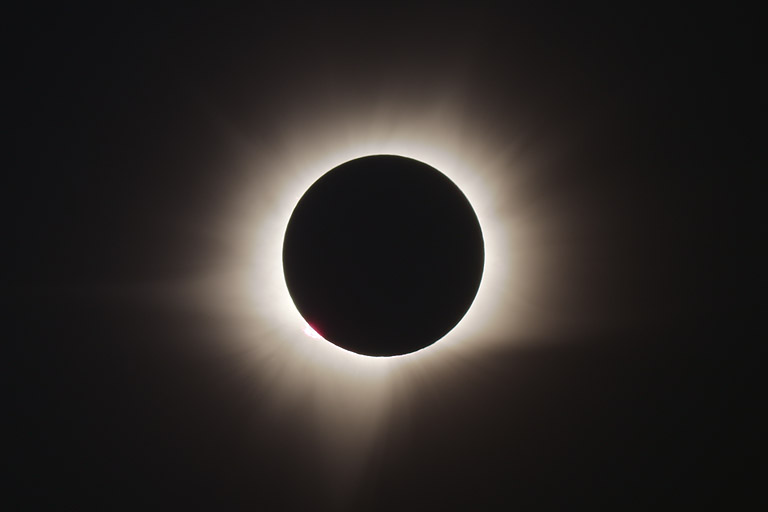 Size: 184 KB Lens: 360 mm / 6.0 Camera: Canon EOS 700D Filter: none Filter: none Exposure times: 1/125 - 1/30 - 1/8 sec Location: 04°47' W, 41°37' N |
Third Contact Size: 179 KB Lens: 360 mm / 6.0 Camera: Canon EOS 700D Filter: none Exposure time: 1/30 @ ISO 400 Location: 04°47' W, 41°37' N |
Please keep in mind that astrophotography is a hobby that demands a lot of money and even more time and effort. So I have to state that the copyrights for all of these pictures are reserved. In case you'd like to use our pictures for more that just watching them, please send me an e-mail-message and ask for permission. Thank you.
Sites related to the 2026 eclipse:
NASA 2026 eclipse information
If you should have noticed that some of these links have changed or if you would like to have added recommendable sites to this non-representative list, please send me an e-mail message.
NASA 2026 eclipse details
ESA 2026 eclipse map details
